
How to Count Calories: A Beginner’s Guide That Actually Works
Published · 7 min read
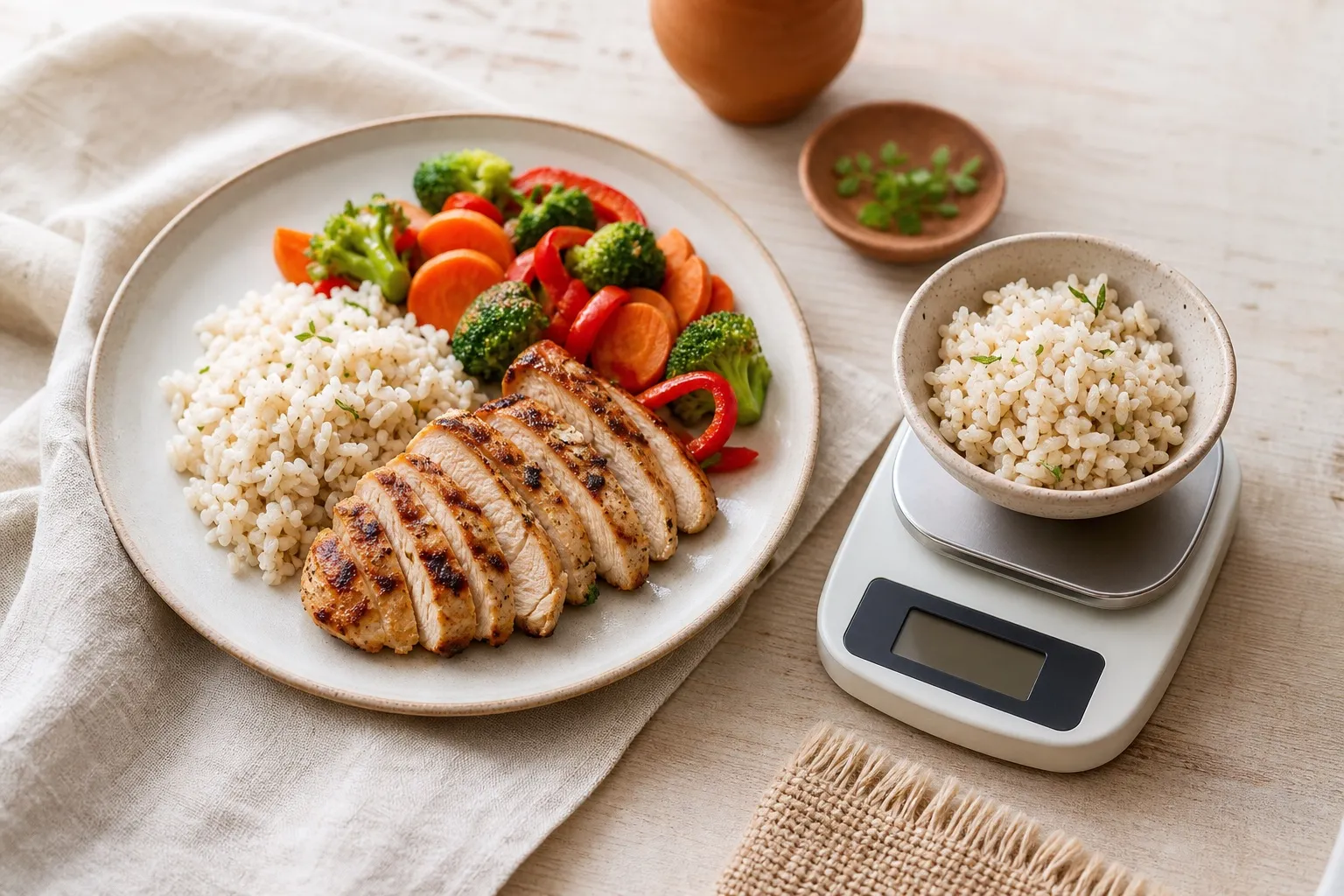
Counting calories is simply keeping track of how much energy you eat. It is not about perfection; it is about knowing roughly where you are so you can make better choices.
Step 1. Find your daily target
Your body burns energy at rest (BMR) plus whatever you do during the day. Together this is your total daily energy expenditure (TDEE).
- Maintain weight: eat around your TDEE.
- Lose weight: a moderate deficit of about 300–500 kcal per day is sustainable for most people.
- Gain muscle: a small surplus of about 200–300 kcal plus enough protein.
Calculators are estimates. Track for 2–3 weeks, watch your weight trend and adjust by 100–200 kcal if needed.
Step 2. Track everything for one week
Log every meal, snack and drink, including cooking oil, sauces and coffee with milk. These “invisible” calories are where most people underestimate.
Step 3. Learn portion sizes
| Food | Portion | Approx. kcal |
|---|---|---|
| Cooked rice | 150 g (1 cup) | 195 |
| Cooked pasta | 200 g | 310 |
| Olive oil | 1 tbsp | 120 |
| Chicken breast, cooked | 150 g | 250 |
| Egg | 1 large | 72 |
| Peanut butter | 1 tbsp | 95 |
| Banana | 1 medium | 105 |
Step 4. Focus on protein and fiber
Protein and fiber keep you full on fewer calories. Build meals around a protein source and vegetables, then add carbs and fats to fit your target.
Common mistakes
- Not counting oils, dressings and drinks
- Guessing portions instead of weighing them at first
- Eating back all the calories a fitness tracker says you burned
- Expecting results in a few days; look at the trend over weeks
The easy way: let the app count
In RecipeMe, every recipe already shows kcal, protein, carbs and fat per serving. Set your daily goal, tick off the meals you eat, and you see what is left for the day. No searching databases, no typing.
Questions
How many calories should I eat a day?
It depends on your age, sex, height, weight and activity. Many adults need roughly 1,600–3,000 kcal per day. A calorie calculator based on the Mifflin-St Jeor equation is a good starting point; adjust after 2–3 weeks based on your results.
Do I need to weigh my food?
Weighing food for the first week or two helps you learn portion sizes. After that, most people can estimate well enough with occasional checks.
Is counting calories healthy?
For many people it is a useful awareness tool. If you have a history of disordered eating or a medical condition, talk to a doctor or registered dietitian first.