How to Calculate Macros for Beginners (Step by Step)
Published · 6 min read
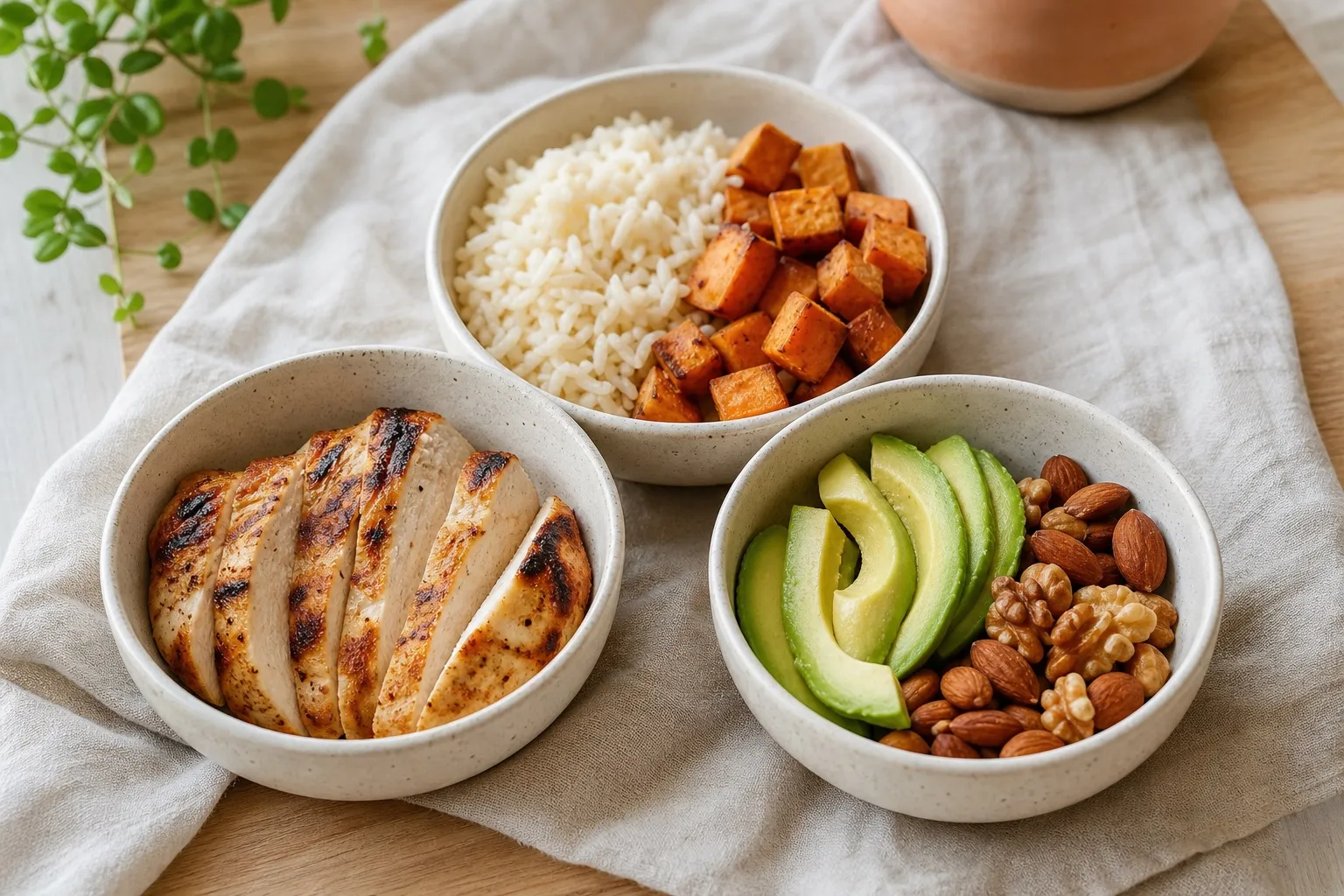
“Macros” are the three nutrients that provide calories: protein, carbohydrates and fat. Tracking them gives you more control than counting calories alone, especially if you want to keep muscle while losing fat.
Step 1. Know the energy in each macro
| Macro | kcal per gram |
|---|---|
| Protein | 4 |
| Carbohydrates | 4 |
| Fat | 9 |
Step 2. Set your calories
Start with your daily calorie target. Our guide on how to count calories explains how to find it.
Step 3. Set protein first
Use 1.6–2.0 g per kg of body weight if you train or are losing weight. See how much protein do I need for details.
Step 4. Set fat
About 25–35% of your calories, and not lower than roughly 0.6 g per kg of body weight.
Step 5. Fill the rest with carbs
Whatever calories remain go to carbohydrates.
Worked example
70 kg person, 1,900 kcal:
- Protein: 70 × 1.8 = 126 g → 504 kcal
- Fat: 30% of 1,900 = 570 kcal → 63 g
- Carbs: 1,900 − 504 − 570 = 826 kcal → 206 g
Tips
- Hit protein and calories first; carbs and fat can vary day to day.
- Plan meals that are balanced so you don’t have to “fix” the numbers at night.
- Use recipes with nutrition already calculated.
The easy way
In RecipeMe every recipe shows protein, carbs and fat, and your day adds up automatically. Ask the AI for “1,900 kcal, 130 g protein” and it plans meals that fit.
Questions
What is a good macro split for weight loss?
A common starting point is about 30% protein, 35–40% carbs and 30–35% fat. Getting enough protein matters most; the carb-to-fat ratio is mostly personal preference.
How many calories are in each macro?
Protein and carbohydrates have about 4 kcal per gram, fat about 9 kcal per gram, and alcohol about 7 kcal per gram.